The wind of change in Suffolk
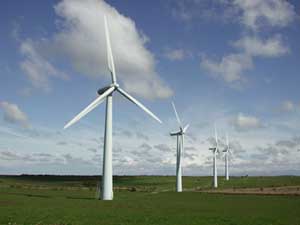
Wind Power is becoming increasingly popular in Suffolk
both on-shore and off-shore. Suffolk’s low lying countryside and
proximity to the coast make it ideal for this type of energy producer.
Over the next few years we can expect to see more and more of these structures
appearing on the landscape.
Plans to place wind turbines in and around Chedburgh and
Rede are in the initial stages of consultation.
Renewable energy companies Enertrag UK and Your-Energy
have confirmed they hope to have around six 400ft power producing giants
in the area by 2006. However, the companies must carry out a range of
environmental surveys before planning permission is granted by St Edmundsbury
Borough Council. It is thought that the six turbines, which will be visible
for up to 10 miles, would be placed in an arc starting at Chedburgh Airfield
and ending near Hawkedon. Some villagers in Chedburgh, Rede, Hawkedon
and Depden have raised concerns regarding the proposals, which would see
the gigantic turbines overshadow 12 parishes. Depden parish councillor
Graham Marler said he believed people should keep an open mind before
objecting to the plans. "We have taken the view not to make a
decision whether we are for or against it until we know all the facts,"
said Mr Marler. Chedburgh Parish Council clerk Nelson Swinney said: "I
currently have no view one way or the other. We don't know enough about
it to make a decision. We need to find out a lot more, such as what the
environmental effects would be”.
Terry Chapelhow, project engineer for Enertrag UK, said there was a good chance the proposal would go ahead."Before we put in for planning permission, we have to carry out a range of surveys and prepare an environmental statement. This will include surveying the land and wildlife and preparing a report into the migration of the birds. We also have to do wind resource measurements to determine whether it is a viable site. We will also talk to parish councils and try to gauge local opinion to try to mitigate any issues people have. But we do intend to move forward on that site, we wouldn't be looking at it if we didn't think it was a good idea. There is no definite, but it is likely."
Wind Power is becoming increasingly popular in Suffolk both
on shore and off shore but not everyone is happy about the idea.
A number of pressure groups have been formed to oppose the erection of
turbines and lobby for alternative methods. Objectors point to the draw
backs of wind power including the noise of the blades and the effect on
local birds and wildlife.
They claim there are better alternatives available including tidal and
bio-mass systems and more off shore systems.
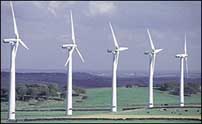
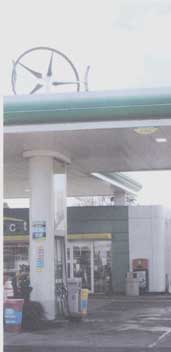
A wind turbine that can be roof-mounted to provide homes
with electricity is poised to enter commercial production after months
of fine-tuning by the UK engineering team developing it. The turbine can
be connected to the grid for embedded power generation or linked to an
immersion water heating system.
The turbine has five blades and a ring diffuser to minimise sound and
turbine-to-building vibrations.
Already the system is being trialed on a Scottish service station. If
this trial works then the manufactures plan to go into full scale production
with a unit that will be available for domestic use.
According to a report published on 19th May 2005 by the
Sustainable Development Commission (SDC), “Wind Power must be made
to work”. ‘Wind Power in the UK’ is set against the
Government target to increase the contribution of renewables to UK electricity
to 10 per cent by 2010 – with an aspiration of 20 per cent by 2020
– as part of efforts to dramatically reduce greenhouse gas emissions.
SDC Chairman Jonathon Porritt said: “Climate change will have
a devastating impact unless urgent action is taken to boost the contribution
of renewables, alongside energy efficiency measures. For this to happen,
good decision-making is needed, and this requires reliable, up to date
information, based on the best available scientific evidence. We believe
wind power is a critically important part of the overall energy mix, and
hope that this authoritative guide will ensure wind power is harnessed
in the most responsible way to ensure that emissions of carbon dioxide
are reduced”.
With the publication of the Stern report on the environment it is clear that everyone needs to find ways of reducing energy consumption and minimise the production of green house gasses.
More and more car manufacturers are producing environmentally friendly vehicles and particularly those that can run on bio-fuel or electricity. Now all aspects of green travel will came under the spotlight at a transport day designed to raise awareness of environmentally-friendly alternatives to the car.
The event, organised by the West Suffolk Green Business Forum with support from St Edmundsbury, boasted a wealth of displays and demonstrations giving vital information on bio-fuels, electric bikes and green travel plans. Internationally-renowned urban designer Ben Hamilton-Baillie gave a key note speech at the seminar, during which he showed a video diary of a trip around Bury St Edmunds.

Lotus Exige 265E Bio-Fuel Car
People who went to the event were given the chance to have their photo taken with the new Lotus Exige 265E, high performance sports car run on bio-ethanol fuel. This renewable fuel is made from crops such as cereals and sugar beet, which absorb carbon dioxide as they grow. In turn, the fuel is much more environmentally-friendly than petrol or diesel.
The seminar tookplace at Denny Bros in Kempson Way, Bury St Edmunds on 29 November 2006.

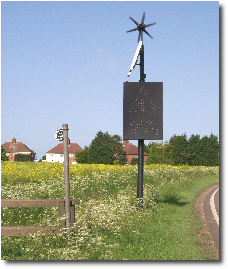
Drivers from Haverhill to Cambridge will have seen the new environmentally friendly traffic signals standing on sentry by the roadside.
These signs trap energy from the wind and the sun and use this energy to power a visual warning screen.
These signs are typical of a new breed of ‘Green’ devices that have been designed to reduce the amount of electricity taken from the National power grid.
That’s Good.
Until recently it has been difficult for home owners to install small scale ‘Green’ sources of power on their houses because of the complicated planning process. Now that is about to change.
The government has recently published a white paper that proposes to simplify the planning process by sweeping away many of the current restrictions. This will clear the way for wind generators or solar panels to be fitted to houses without the need for planning permission.
Already many large superstores are stocking mini wind generators in anticipation of this proposal becoming law.
That’s Good
Not everyone is pleased about these new proposals and environmental groups suspect a hidden agenda.
When the new rules are introduced it will become much easier for large projects such as Nuclear power plants, Road extensions and airport expansions to be approved. As the government plans five new airport expansion projects including a new runway at Stansted and over 115 miles of new motorway it seems likely that Friends of the Earth are right to be suspicious.
The government also plans to construct
10 new nuclear power plants including a third reactor at Sizewell in
Suffolk -
The local community is particularly concerned that they will not have the opportunity to raise concerns relating to the safety of the new plant.
Under the new rules safety issues including the storage of radioactive waste on site and evacuation procedures in the event of an accident will not be covered by a public inquiry.
That’s Bad